When DTC Test Results Contradict Doctor's Diagnosis, Whose Opinion Should You Follow?
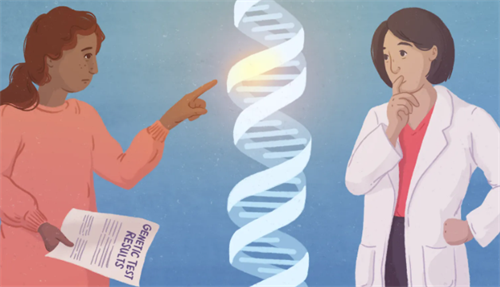
In recent years, direct-to-consumer (DTC) medical testing—ranging from genetic screening to microbiome analysis and continuous biomarker monitoring—has rapidly entered everyday life. Consumers can now access health-related data without visiting a clinic, often within days. At the same time, traditional clinical diagnosis remains the foundation of medical decision-making.
When these two sources of information conflict, the question naturally arises: which one should be trusted?
A more precise way to approach this issue is not to ask “who is right”, but to understand why disagreement occurs, what each system is designed to do, and how individuals can use both types of information responsibly.
Two Systems, Two Logics: Why Conflicts Are Inevitable
The apparent contradiction between DTC test results and a physician’s diagnosis is not simply a disagreement over facts. It reflects two fundamentally different systems of producing and interpreting health information.
1. Different Goals: Exploration vs. Decision-Making
DTC testing is, in essence, an information service. Its purpose is to provide consumers with insights—often probabilistic—about their health status, risks, or biological characteristics. For example, a genetic test may indicate an increased statistical risk of type 2 diabetes based on certain gene variants. This is not a diagnosis, but a population-based inference.
In contrast, clinical diagnosis is a decision-oriented process. A physician orders tests to answer a specific question: Does this patient currently have a particular condition? The results directly influence treatment decisions, such as prescribing medication or initiating further investigations.
This difference explains why DTC results often feel ambiguous, while clinical conclusions are more definitive. They are designed for different purposes.
2. Different Standards of Evidence: Three Levels of Validity
For any medical test to be clinically meaningful, it should meet three key standards:
Analytical validity: Does the test accurately measure what it claims?
Clinical validity: Does the result correlate with a disease or condition?
Clinical utility: Does the result improve patient outcomes or guide decisions?
Many DTC tests primarily address the first level, and even that is not always consistent. In contrast, clinical diagnostics are expected to meet all three.
A 2026 evaluation of multiple DTC microbiome testing services demonstrated this gap clearly. When identical samples were sent to different companies, the results varied significantly—sometimes more due to technical differences than biological variation. This suggests that some findings may reflect methodological noise rather than true health signals.
Clinical tools, by comparison, undergo extensive validation. For example, coronary artery calcium scoring has been repeatedly shown in large-scale studies to improve cardiovascular risk stratification, especially for intermediate-risk populations.
3. Regulatory Differences and Market Dynamics
DTC testing operates in a hybrid regulatory space. In the United States, the FDA regulates tests that claim diagnostic purposes, but many DTC products are marketed as “wellness” tools, which face less scrutiny. Regulatory gaps allow some companies to avoid rigorous validation requirements.
A commentary in The Lancet highlighted that rapid industry growth—projected to exceed $9 billion globally by 2033—has been driven partly by consumer anxiety and commercial incentives rather than clinical necessity [1].
Marketing strategies often emphasize empowerment and early detection, but may understate limitations. This creates a mismatch between consumer expectations and actual clinical value.
Case Analysis: When Results Conflict
Understanding real-world scenarios helps clarify how these differences play out.
Scenario 1: Genetic Cancer Risk Testing
A consumer receives a DTC report indicating a “risk variant” in BRCA1 or BRCA2 genes, associated with breast and ovarian cancer.
From a clinical perspective, several questions arise:
Scope of testing: Many DTC tests examine only a limited number of known variants. Thousands of mutations exist, but only a subset is included in consumer tests.
Population specificity: Some variants are relevant only to specific ethnic groups.
Interpretation context: Family history remains one of the strongest predictors of hereditary cancer risk.
A physician would typically recommend confirmatory testing using clinical-grade sequencing, along with a detailed family history assessment. A positive DTC result may warrant attention, but it is not sufficient for diagnosis. Conversely, a negative result does not rule out risk.
This illustrates a key point: clinical interpretation integrates multiple sources of evidence, not just a single test.
Scenario 2: Cardiovascular Risk and “Biological Age”
Some DTC platforms provide metrics such as “biological age” or biomarkers like lipoprotein(a).
Lipoprotein(a) is recognized in guidelines as an independent cardiovascular risk factor. Measuring it at least once in adulthood is considered reasonable in many clinical frameworks.
However, a physician does not interpret this value in isolation. Instead, it is combined with:
Blood pressure;
Lipid profile;
Blood glucose;
Smoking status;
Imaging (e.g., coronary calcium score);
This broader assessment determines overall 10-year cardiovascular risk, which guides management decisions.
A DTC result may provide one piece of the puzzle, but clinical care requires assembling the entire picture.
The Hidden Risk: Diagnostic Cascade
One of the less discussed consequences of DTC testing is the diagnostic cascade.
This occurs when a minor or uncertain finding leads to:
Additional tests;
Specialist consultations;
Potentially invasive procedures;
In some cases, the initial finding may have limited clinical significance, but the follow-up process can create anxiety, cost, and even harm.
Studies and clinical observations suggest that false positives and uncertain results are common in broad screening contexts, particularly when tests are applied to asymptomatic individuals without clear indications [2].
Why Not Simply Trust One Side?
It may seem intuitive to choose either the DTC report or the physician’s opinion. However, both extremes have limitations.
Risks of Relying Solely on DTC Testing:
False positives leading to unnecessary interventions
False negatives providing false reassurance
Lack of clinical context
Limited post-test support
Some individuals receiving genetic risk information, such as APOE4 status linked to Alzheimer’s disease, report significant anxiety without clear guidance on next steps [3].
Risks of Ignoring DTC Data Entirely
On the other hand, DTC testing can:
Increase health awareness;
Prompt earlier medical consultation;
Encourage lifestyle changes;
Surveys suggest that many users turn to DTC testing because they feel underserved or overlooked in traditional healthcare settings. The test result—accurate or not—serves as a conversation starter.
A More Practical Approach: From “Who Is Right” to “How to Use the Information”
A more constructive framework is to treat DTC results as inputs, not conclusions.
Step 1: Build a Reliable Baseline — Family Health History
Family history remains one of the most powerful predictors of disease risk. It often captures genetic, environmental, and behavioral factors simultaneously.
Before consulting a physician, it is useful to map:
Chronic diseases in first-degree relatives;
Early-onset conditions;
Patterns across generations;
This information often carries greater clinical weight than many DTC findings.
Step 2: Engage in Shared Decision-Making
Modern healthcare increasingly emphasizes shared decision-making, where patients and physicians collaborate.
A 2026 expert consensus highlights that optimal decisions are based on:
Best available evidence;
Clinical expertise;
Patient values and preferences;
In practice, this means clearly communicating:
What test was performed;
What concerns arise from the result;
What questions need clarification;
The physician then evaluates:
Evidence quality;
Relative risk contribution;
Possible next steps;
Step 3: Reconstruct the Clinical Logic Chain
Effective medical decisions follow a structured process:
Diagnosis – What condition is present?
Intervention – What actions are appropriate?
Evaluation – What outcomes should be monitored?
DTC testing often touches only the first step, and sometimes incompletely.
Placing results within this framework helps clarify their role. For example:
Does the finding align with symptoms?
Is confirmatory testing available?
Would the result change management?
If the answer to the last question is “no,” the practical value of the test may be limited.
The Broader Context: Why DTC Testing Is Growing
The expansion of DTC testing is not solely technological—it reflects system-level dynamics.
1. Accessibility and Convenience
DTC tests eliminate barriers such as appointment scheduling and geographic access. This convenience is a major driver of adoption.
2. Consumer Autonomy
Many individuals seek greater control over their health. DTC testing aligns with this preference by offering immediate access to data.
3. Market Incentives
The industry has attracted significant investment, particularly in areas like microbiome testing. However, rapid growth has outpaced evidence in some cases.
Research has identified concerns including:
Limited clinical validation;
Misleading marketing claims;
Data privacy issues;
Potential for self-diagnosis errors [4]
4. Regulatory Gaps
Differences between diagnostic and “wellness” classifications allow some products to enter the market with minimal oversight.
Ongoing debates in the United States and Europe focus on how to balance:
Consumer protection;
Innovation;
Clinical reliability;

Looking Ahead: Integration Rather Than Replacement
Current trends suggest that DTC testing will not replace clinical medicine, but rather become integrated into it.
Recent FDA updates (2025–2026) emphasize:
Increased transparency in test performance;
Expanded oversight of laboratory-developed tests;
Encouragement of clinical validation pathways;
Similarly, clinical guidelines are beginning to acknowledge certain consumer-generated data, particularly when supported by evidence.
The future model may involve:
Hybrid testing pathways;
Built-in genetic counseling;
Stronger physician–platform collaboration;
Conclusion
When DTC test results conflict with a doctor’s diagnosis, the situation is not a competition between two authorities. It reflects the coexistence of two different knowledge systems.
DTC testing is valuable for raising questions and increasing engagement. Clinical medicine is essential for answering those questions within a structured, evidence-based framework.
The most effective approach is not to choose one over the other, but to use each according to its strengths.
Ultimately, reliable health decisions emerge from a process that combines:
Data;
Clinical expertise;
Individual context;
In this process, the role of the individual is evolving—from passive recipient to active participant in decision-making.
References:
[1] The Lancet. (2024). Direct-to-consumer medical testing: more harm than good? The Lancet, 403(10430), 1234–1235. https://doi.org/10.1016/S0140-6736(24)00567-8
[2] U.S. Food and Drug Administration (FDA). (2025). Laboratory developed tests: regulatory framework update. https://www.fda.gov/medical-devices
[3] National Institutes of Health (NIH). (2023). Genetic risk disclosure and psychological impact: APOE and Alzheimer’s disease. https://www.nih.gov
[4] Torkamani, A., Wineinger, N. E., & Topol, E. J. (2023). The personal and clinical utility of polygenic risk scores. Nature Reviews Genetics, 24(6), 435–450. https://doi.org/10.1038/s41576-023-00574-3
[5] European Medicines Agency (EMA). (2024). Guidance on clinical evaluation of diagnostic tests. https://www.ema.europa.eu
About the Author
Dr. Jonathan E. Brooks is a physician and healthcare systems researcher specializing in diagnostic technologies, digital health, and evidence-based medicine. He earned his MD from the University of Washington School of Medicine and a Master of Science in Clinical Epidemiology from Stanford University. His work focuses on evaluating emerging health technologies—including direct-to-consumer testing and digital diagnostics—and their impact on clinical decision-making, patient behavior, and healthcare systems. Dr. Brooks contributes to medical science communication initiatives aimed at translating complex evidence into clear, practical insights for general audiences.
Disclaimer
This article is intended for informational purposes only and does not constitute medical advice. Health-related decisions should be made in consultation with qualified healthcare professionals. The content reflects publicly available research and regulatory updates as of 2026.
Recommended for you: