Pregnancy Medication: How Much Can the Placental Barrier Block?

Many pregnant women ask the same question at some point: If I take medicine, will it reach my baby?
A common belief is that the placenta acts like a strong wall that blocks harmful substances. This idea is partly true—but also incomplete. Modern research shows that the placenta is not a solid barrier. It works more like a smart filter, allowing some substances through, limiting others, and actively controlling many.
With new studies published between 2024 and 2026, doctors now have a clearer understanding of how medications move from mother to fetus. This has changed how risks are evaluated—from general caution to more precise, evidence-based decisions.
The Placenta: Not a Wall, but a Checkpoint
The placenta connects the mother and the fetus. Its job is to:
Deliver oxygen and nutrients;
Remove waste;
Support hormone balance;
To do this, it must allow substances to pass between the two. So instead of being a sealed wall, the placenta behaves more like a security checkpoint. Some substances pass through easily, some are slowed down, and others are pushed back.
This system works well most of the time, but it is not perfect. For example, in certain blood type incompatibilities, antibodies from the mother can cross the placenta and affect the fetus. This shows that even larger biological substances can sometimes pass through.
How Do Drugs Cross the Placenta?
Most medications move across the placenta in simple ways. The most common is similar to how a drop of dye spreads in water—moving from where there is more of it (the mother’s blood) to where there is less (the fetus).
But there is more to it than that.
The placenta also has special proteins that act like “gatekeepers.” Some help move substances into the fetus, while others actively send drugs back into the mother’s bloodstream. This is one reason why two similar drugs can behave very differently during pregnancy.
Large molecules, like certain antibodies, use a different route. They are carried across by specific transport systems, especially later in pregnancy.
What Makes a Drug More Likely to Reach the Baby?
Whether a drug crosses the placenta depends on a few key features:
Size: Smaller drugs pass more easily
Fat solubility: Drugs that dissolve in fat cross more easily
Protein binding: Drugs tightly bound in the blood are less likely to move
Dose: Higher doses increase the chance of transfer
Another important factor is time. As pregnancy progresses, the placenta becomes more efficient at transferring substances. This means some drugs that barely cross early in pregnancy may pass more easily later.
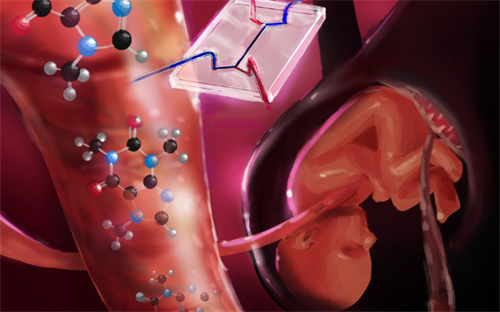
Does Crossing the Placenta Mean Harm?
Not necessarily. This is one of the most important points to understand.
A drug reaching the fetus does not automatically mean it will cause harm. What matters is:
How much reaches the fetus;
When during pregnancy it happens;
What the drug actually does in the body;
In many cases, the amount that reaches the fetus is much lower than the amount in the mother’s blood. The drug may also be broken down or diluted before it can have any effect.
Timing Matters More Than Many People Expect
The stage of pregnancy plays a major role in how drugs affect the fetus.
Early pregnancy (first trimester): This is when organs are forming. Certain drugs may affect development during this period.
Later pregnancy: The focus shifts to growth and function. Drugs may influence birth weight, organ function, or how the baby adapts after birth.
Because of this, the same medication may carry different levels of risk depending on when it is used.
Anesthesia: A Real-Life Example
Anesthesia provides a clear example of how the placental barrier works.
Studies show that most anesthetic drugs do cross the placenta, but their effects depend on how they are used.
For example:
Some drugs enter the fetus quickly but are used in controlled doses and cleared rapidly;
Others cross the placenta but are broken down quickly in the fetus;
Some larger drugs barely cross at all;
Interestingly, certain muscle relaxants used during surgery are unlikely to reach the fetus because of their size and chemical properties.
This shows an important principle:
Even if a drug crosses the placenta, it can still be used safely when the dose and timing are carefully managed.
What New Research Is Showing (2024–2026)
Recent studies have moved beyond theory and started measuring actual drug levels in the fetus.
Some findings include:
Certain medications can reach levels close to the mother’s blood concentration;
Others only reach a small fraction (for example, about 25–40%);
Some drugs cross easily but remain below levels that would cause any effect;
For example, newer research on pain relievers has helped clarify concerns. In 2026, European regulators confirmed that using acetaminophen at recommended doses during pregnancy does not increase the risk of autism or ADHD in children.
These findings help reduce uncertainty and allow more confident decision-making.

Why “No Data” Doesn’t Mean “Unsafe”
Many medications have limited data in pregnancy. This can make guidelines seem overly cautious.
However, this often reflects lack of research, not proven risk. New studies are actively filling these gaps by tracking drug levels and long-term outcomes in children.
This is an important shift. Instead of avoiding medications because of uncertainty, doctors are increasingly using available evidence to make balanced decisions.
The Placenta Changes Over Time
The placenta is not fixed—it changes throughout pregnancy.
As it grows:
The surface area increases;
The barrier becomes thinner;
Blood flow improves;
This means drug transfer can increase over time. It also explains why some medications are considered lower risk early in pregnancy but require more attention later.
A More Practical Way to Think About Risk
Instead of asking, “Is this medicine safe?” it may be more useful to think in three steps:
Does the drug reach the fetus?
How much reaches the fetus?
Is that amount likely to have an effect?
This way of thinking reflects how doctors now approach medication decisions.
Treating the Mother Is Part of Protecting the Baby
It is easy to focus only on the potential risks of medication. But untreated illness can also affect pregnancy.
For example:
Untreated infections can worsen or spread;
Poorly controlled chronic conditions can affect fetal growth;
Mental health conditions can impact both mother and baby;
In many cases, appropriate treatment improves outcomes for both.
Looking Ahead: More Precise Answers
New research tools are helping scientists better understand how drugs move through the placenta. These include lab models that simulate the placenta and advanced computer models that predict drug behavior.
Large ongoing studies are expected to provide clearer answers in the coming years. The goal is to move toward personalized recommendations, based on real data rather than general rules.
Conclusion
The placenta does not completely block medications, but it does not allow everything to pass freely either. It acts as a selective and changing system that controls what reaches the fetus.
Most drugs can cross the placenta to some extent, but this does not automatically mean harm. The real impact depends on how much crosses, when it happens, and what the drug does.
With newer research, decisions about medication during pregnancy are becoming more precise. Instead of relying on fear or assumptions, they are increasingly based on evidence and careful evaluation.
References:
[1] U.S. Food and Drug Administration (FDA). (2025). Pregnancy and Lactation Labeling Rule (PLLR): Updated guidance. https://www.fda.gov
[2] European Medicines Agency (EMA). (2026). Review of paracetamol safety in pregnancy. https://www.ema.europa.eu
[3] Anderson, G. D. (2024). Pregnancy-induced changes in pharmacokinetics. Clinical Pharmacology & Therapeutics, 115(1), 35–44. https://doi.org/10.1002/cpt.3001
[4] Maltepe, C., & Koren, G. (2023). The role of the placenta in drug transport. Clinical Pharmacokinetics, 62(2), 123–138. https://doi.org/10.1007/s40262-022-01160-1
[5] Zhao, Y., et al. (2026). Placental transporters and fetal drug exposure. Nature Reviews Drug Discovery, 25(1), 45–60. https://doi.org/10.1038/s41573-025-00210-3
Author Information
This article was written by Dr. Alistair Vaughn Mercer, a medical content specialist focusing on clinical pharmacology and maternal–fetal health. He has experience analyzing how medications behave in the body, including how they cross the placenta and affect fetal exposure. His work focuses on explaining medical research in a clear and practical way for general readers, while maintaining accuracy and alignment with current clinical guidelines and evidence-based standards.
Disclaimer
This article is for informational purposes only and does not replace medical advice. Medication use during pregnancy should be discussed with a qualified healthcare professional, based on individual health conditions and the most up-to-date clinical evidence.
Recommended for you: