30% of Drug Research Failures Are Linked to Adverse Reactions. Can Artificial Intelligence Provide Earlier Warnings?
Every year, pharmaceutical companies invest hundreds of billions of dollars trying to turn laboratory discoveries into safe and effective treatments. Yet most experimental drugs never reach patients. One frequently cited estimate suggests that roughly 30% of drug development failures occur because of safety concerns, including unexpected adverse reactions discovered during clinical trials or even after approval.
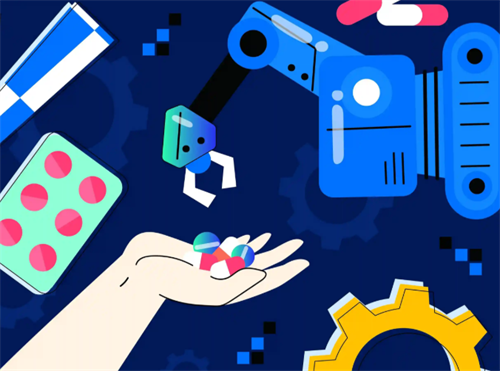
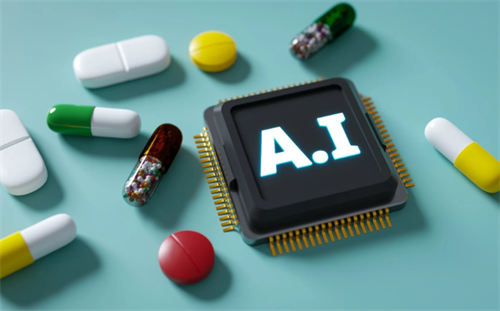
This raises a practical question that researchers and regulators increasingly discuss: Could artificial intelligence (AI) help predict safety risks earlier—before large clinical trials begin or before patients are exposed?
Over the past five years, AI systems capable of analyzing biological data, chemical structures, and clinical records have grown rapidly. Pharmaceutical companies, regulatory agencies, and academic laboratories are now exploring whether these systems can detect patterns that traditional methods miss.
The answer is not simple. AI is unlikely to eliminate safety risks entirely. However, emerging research suggests that it may improve the ability to anticipate adverse reactions earlier in the drug development process. Understanding how this works requires examining both the science behind drug safety and the role of data-driven prediction.
Why Adverse Reactions Remain One of the Largest Obstacles in Drug Development
Drug safety problems are not new. Many of the most famous pharmaceutical setbacks—from withdrawn medicines to halted clinical trials—stem from side effects that were not fully understood at earlier stages.
The reason lies in the complex biology of drug responses.
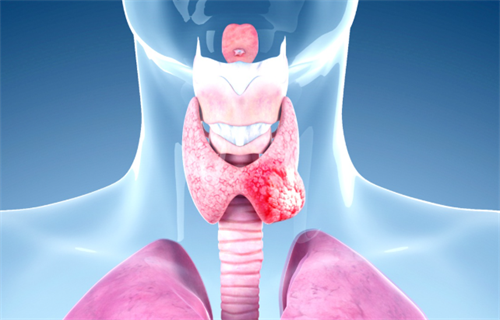
A medicine interacts with multiple biological systems simultaneously. While it is designed to influence a specific target—such as a receptor, enzyme, or signaling pathway—it often affects other proteins as well. These unintended interactions can lead to toxic effects in organs like the liver, heart, or nervous system.
According to analyses published by the U.S. Food and Drug Administration (FDA) and pharmaceutical research groups, the overall probability of a drug successfully progressing from early research to market approval is less than 10%. Among failed candidates, safety concerns remain a major cause of termination during both preclinical testing and clinical trials.
A report analyzing industry data from multiple development programs found that approximately one-third of late-stage failures involve safety signals, including liver toxicity, cardiac arrhythmias, immune reactions, or metabolic complications. These findings were summarized in regulatory and industry reviews updated through 2025–2026 [1].
Several factors contribute to this challenge:
1. Biological Complexity
Human biology is highly variable. Genetic differences, environmental exposure, and underlying diseases can all influence how a patient responds to medication. What appears safe in animal studies may behave differently in humans.
2. Limited Early Data
In early development, researchers often work with relatively small datasets. Preclinical experiments may include only a few animal models or laboratory systems. This limited evidence makes it difficult to identify rare but serious adverse effects.
3. Late Emergence of Safety Signals
Some safety problems only appear after prolonged exposure or in large populations. Clinical trials involving a few thousand participants may not capture rare adverse reactions that occur in one out of ten thousand patients.
These realities explain why pharmaceutical safety evaluation relies on multiple stages—from computational modeling to animal testing to multi-phase clinical trials. Yet even with these safeguards, uncertainty remains inherent to drug development.
The Core Mechanism: How AI Attempts to Predict Adverse Reactions Earlier
Artificial intelligence approaches drug safety prediction from a different perspective. Instead of relying solely on traditional laboratory testing, AI analyzes large-scale datasets to identify patterns associated with toxic effects.
These systems typically combine three types of information.
1. Chemical Structure Analysis
Machine learning models can analyze the molecular structures of experimental compounds. Certain chemical features are historically associated with toxic reactions—for example, structures linked to liver enzyme interference or cardiac ion channel disruption.
AI systems trained on thousands of known drug molecules can estimate the probability that a new compound may produce similar effects.
Recent studies published in Nature Machine Intelligence and other journals (2025–2026) have shown that deep learning models can detect structural toxicity patterns with accuracy comparable to specialized laboratory assays [2].
In practice, pharmaceutical companies increasingly use such models during early compound screening. Instead of testing millions of molecules experimentally, researchers can prioritize those predicted to have lower toxicity risk.
2. Biological Target Mapping
Adverse reactions often occur when a drug interacts with unintended biological targets.
AI systems can map the complex network of proteins, pathways, and tissues affected by a molecule. By analyzing large biological databases—including gene expression datasets and protein interaction maps—models can predict potential off-target effects.
For example, computational models have been developed to identify compounds likely to interfere with cardiac ion channels, a mechanism linked to dangerous arrhythmias. These predictive tools are increasingly incorporated into early safety assessment workflows.
3. Real-World Clinical Data Analysis
Another important data source comes from real-world patient data.
Hospitals, pharmacovigilance systems, and clinical trial databases contain millions of records describing how patients respond to medications. Machine learning algorithms can analyze these datasets to identify previously unnoticed associations between drugs and adverse reactions.
In 2024 and 2025, the FDA expanded its Sentinel Initiative, a large national system that monitors drug safety using real-world health data. AI-driven analytic tools are being explored to detect safety signals more rapidly within these datasets [3].
Together, these approaches form what researchers sometimes call a predictive safety framework: integrating chemical, biological, and clinical information to estimate risk before large-scale trials begin.
From Laboratory Prediction to Clinical Evidence
While the theoretical advantages of AI prediction are compelling, the most important question remains: Does it work in real-world drug development?
Recent examples suggest cautious optimism.
AI-Assisted Toxicity Prediction in Early Drug Discovery
Several pharmaceutical companies report that AI-assisted screening has reduced the number of compounds failing due to toxicity during preclinical development.
For example, internal analyses presented at international drug discovery conferences between 2024 and 2026 indicate that integrating machine learning toxicity models into early compound selection can reduce late-stage safety failures by identifying problematic molecules earlier.
However, these reports also emphasize that AI predictions are not definitive. Instead, they serve as additional filters alongside traditional laboratory assays.
Predictive Models for Drug-Induced Liver Injury
Drug-induced liver injury (DILI) remains one of the most common reasons for drug withdrawal. Researchers have developed AI models trained on thousands of compounds with known liver toxicity profiles.
A 2025 multi-institution study reported that deep learning models predicted potential DILI risk with accuracy significantly higher than traditional rule-based approaches [4]. These models are now being explored for integration into preclinical safety evaluation pipelines.
AI in Post-Market Safety Monitoring
Artificial intelligence is also being tested in pharmacovigilance systems.
The European Medicines Agency (EMA) has explored machine learning tools capable of analyzing large volumes of safety reports submitted through its EudraVigilance system. According to regulatory updates in 2025, AI-based signal detection may help identify emerging safety concerns earlier than manual review alone [5].
This approach reflects a broader shift toward continuous safety monitoring, combining clinical trial data with real-world evidence.
Clinical Significance: Moving From Reaction to Prediction
What could earlier safety prediction mean for patients and healthcare systems?
The implications extend beyond pharmaceutical economics.
1. Reducing Patient Exposure to High-Risk Compounds
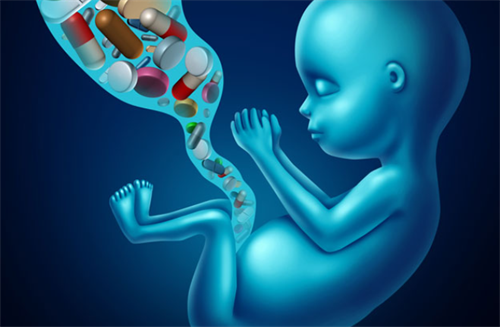
If safety risks are identified earlier, fewer experimental drugs reach late-stage clinical trials. This reduces the number of participants exposed to compounds that may ultimately prove unsafe.
From an ethical perspective, earlier prediction may improve the risk–benefit balance of clinical research.
2. Improving Drug Development Efficiency
Safety failures in late-stage trials are extremely expensive. Identifying problematic compounds earlier may allow researchers to redirect resources toward more promising candidates.
This shift could help shorten development timelines and reduce overall research costs.
3. Supporting Personalized Risk Assessment
AI safety prediction may eventually connect with precision medicine approaches.
Certain adverse reactions occur primarily in specific genetic populations. Machine learning models that integrate pharmacogenomic data could help identify individuals who may be more vulnerable to particular drug effects.
Although this area remains under development, regulatory agencies increasingly recognize the role of genetic risk factors in drug safety evaluation.

Why AI Cannot Eliminate Drug Risk?
Despite its potential, AI is not a universal solution.
Several limitations remain.
Data Quality Challenges
AI models rely heavily on the quality of their training data. Many historical datasets contain incomplete information or inconsistent reporting of adverse reactions.
A survey of pharmaceutical data scientists in 2025 found that data quality and integration issues remain one of the most common barriers to AI adoption.
Biological Uncertainty
Human physiology involves complex interactions between genes, environment, disease, and lifestyle. Even the most advanced models cannot capture every variable influencing drug response.
Therefore, AI predictions represent probabilistic estimates rather than guarantees.
Regulatory Oversight
Regulatory agencies are also evaluating how AI models should be validated and documented.
The FDA has proposed frameworks for AI and machine learning–enabled medical technologies, emphasizing transparency, validation, and ongoing monitoring. Final guidance updates are expected to evolve through 2026 and beyond.
These considerations highlight an important point: AI tools must be integrated into existing scientific and regulatory processes rather than replacing them.
Practical Suggestions: How Readers Can Interpret AI Safety Claims
For readers encountering news about AI predicting drug safety, several perspectives may help interpret these developments.
Consider the Stage of Development
AI models are currently most useful in early discovery and safety screening. Their role in predicting rare long-term adverse reactions remains limited.
Focus on Clinical Evidence
Claims about AI effectiveness should ideally be supported by peer-reviewed research or validated case studies rather than theoretical performance metrics.
Understand the Complementary Role of AI
In most pharmaceutical workflows, AI serves as a decision-support tool rather than an autonomous decision-maker. Human scientists still evaluate experimental data and design studies.
Expect Gradual Adoption
Technological transitions in medicine tend to occur gradually. AI-based safety prediction will likely expand step by step as datasets improve and regulatory standards mature.
Conclusion
Returning to the original question: Can artificial intelligence provide early warnings for drug safety risks?
The emerging evidence suggests that it can improve the probability of detecting certain risks earlier, particularly during the initial phases of drug discovery and compound screening.
However, AI does not eliminate uncertainty. Clinical trials, real-world monitoring, and regulatory review will continue to play essential roles in ensuring medication safety.
The more meaningful transformation may lie in a broader shift in pharmaceutical research—from reacting to adverse events after they occur to predicting potential risks before large populations are exposed.
If AI continues to evolve alongside improved biomedical data, this predictive approach could gradually reshape how the pharmaceutical industry manages one of its most persistent challenges: understanding how medicines interact with the complexity of human biology.
References:
[1] U.S. Food and Drug Administration. (2025). Advancing drug safety evaluation in clinical development. https://www.fda.gov
[2] Zhavoronkov, A., et al. (2025). Artificial intelligence in drug discovery and toxicity prediction. Nature Machine Intelligence. https://www.nature.com
[3] U.S. Food and Drug Administration Sentinel Initiative. (2026 Update). Real-world evidence for drug safety monitoring. https://www.sentinelinitiative.org
[4] He, S., et al. (2025). Deep learning models for prediction of drug-induced liver injury. Nature Communications. https://www.nature.com
[5] European Medicines Agency. (2025). Artificial intelligence workplan for pharmacovigilance systems. https://www.ema.europa.eu
About the Author:
Dr. Everett Callahan is a U.S.–based biomedical informatics researcher specializing in artificial intelligence in drug development, pharmacovigilance, and precision medicine. He holds a PhD in Biomedical Informatics and a Master of Science in Pharmaceutical Sciences, with research focused on the application of machine learning to drug safety prediction and clinical data analysis. His work examines how large-scale biomedical datasets, real-world evidence, and AI modeling can improve the early detection of adverse drug reactions and support safer pharmaceutical innovation. Dr. Callahan regularly translates complex developments in biotechnology and medical research into accessible insights for general audiences interested in health and science.
Disclaimer
This article is intended for educational and informational purposes only. It does not constitute medical advice, diagnosis, or treatment recommendations. Medical decisions should always be made in consultation with qualified healthcare professionals. Scientific research and regulatory guidance evolve over time, and readers are encouraged to consult updated clinical evidence and professional medical sources when evaluating healthcare information.