The First AI-Discovered Drug May Be Approved in 2027:The Ten-Year Journey from Concept Hype to Regulatory Recognition
Around 2016–2018, the phrase “AI drug discovery” began appearing frequently in scientific conferences and biotechnology investment reports. At that time, many observers regarded it as another wave of technological enthusiasm rather than a structural change in medicine. Traditional pharmaceutical research had remained largely unchanged for decades: scientists identified biological targets, screened thousands of molecules in laboratories, and gradually optimized candidate drugs. The process typically required 10–15 years and billions of dollars, with a final approval success rate often below 10%.
Ten years later, the situation is evolving. Several drug candidates discovered or designed with artificial intelligence have entered human clinical trials, and at least one has reached Phase II clinical validation. If clinical development proceeds smoothly, regulatory approval of the first end-to-end AI-discovered drug could occur around 2027, according to projections from pharmaceutical developers and regulatory timelines.
The path from concept to potential approval is not simply a story about technological acceleration. It also reflects deeper changes in how modern medicine understands disease mechanisms, evaluates evidence, and regulates new therapies.
1. From Laboratory Intuition to Algorithmic Hypotheses
Traditional drug discovery begins with a scientific hypothesis. Researchers identify a biological pathway believed to be related to disease and then search for molecules capable of modifying that pathway.
However, the human brain can only explore a tiny portion of possible chemical structures. The number of theoretically drug-like molecules has been estimated at 10⁶⁰ or more, far beyond what laboratory screening can realistically test.
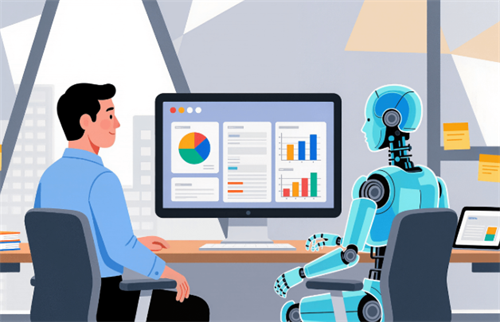
Artificial intelligence approaches the problem differently. Instead of manually exploring molecules, machine-learning models analyze vast biomedical datasets to predict:
disease-related genes and pathways;
molecular binding affinity;
toxicity and metabolism;
potential clinical effects;
Generative AI systems can also design entirely new molecular structures, rather than selecting from existing libraries.
A representative example is the drug candidate rentosertib, developed using AI platforms that first identified a new disease target (TNIK kinase) and then designed molecules predicted to interact with it. The entire early discovery phase took about 30 months, compared with roughly six years in traditional pipelines.[3]
This change is sometimes described as moving from “experiment-driven discovery” to “prediction-guided discovery.”
Importantly, the goal is not to eliminate laboratory research. Instead, AI acts as a filter: it reduces the number of compounds scientists must synthesize and test, allowing experiments to focus on the most promising candidates.
2. A Clinical Milestone: The First AI-Generated Drug in Human Trials
In 2023, an AI-designed drug candidate entered human clinical trials for idiopathic pulmonary fibrosis (IPF), a progressive lung disease characterized by scarring of lung tissue.[1]
IPF is a challenging disease to treat. Current therapies slow disease progression but rarely reverse lung function decline. Median survival after diagnosis is approximately 3–5 years.
The AI-generated candidate was designed to inhibit TNIK, a signaling protein believed to influence fibrotic pathways in lung tissue.
Phase IIa Clinical Results
According to results reported in 2024–2025:
Patients receiving 60 mg daily of the drug experienced a mean improvement of +98.4 mL in forced vital capacity (FVC).
The placebo group showed a decline of −20.3 mL over the same period.[3]
Forced vital capacity is a standard measure of lung function in pulmonary fibrosis trials. While the study was relatively small, involving 71 patients, the difference suggested potential clinical benefit.
Equally important, the trial demonstrated that a drug discovered and designed through AI could show measurable efficacy in human patients, not merely theoretical promise.
From a scientific perspective, this milestone shifts the discussion about AI in medicine from “possible” to “testable.”
3. Regulatory Recognition: AI Enters the Drug Development Framework
The progress of AI-discovered drugs has coincided with changes in regulatory policy.
In 2026, regulators including the U.S. Food and Drug Administration (FDA) and the European Medicines Agency (EMA) released joint principles for the responsible use of artificial intelligence in drug development.[4]
The guidance emphasizes several requirements:
Transparency of algorithms;
Validation of training data;
Human oversight in decision-making;
Independent verification of results;
Regulators are not approving “AI drugs” as a separate category. Instead, they evaluate drugs using existing safety and efficacy standards while assessing how AI tools were used during development.
The FDA has also begun qualifying AI-based research tools for use in clinical trials. One example is an AI system designed to analyze liver biopsy images in metabolic liver disease studies, helping standardize pathological assessment.[2]
These steps indicate that regulators increasingly view AI not merely as experimental technology but as part of the emerging biomedical research infrastructure.

4. Why AI May Improve Drug Discovery Success Rates
Drug development has historically been associated with high failure rates. Most compounds fail during clinical trials due to insufficient efficacy or safety concerns.
AI may improve success rates in several ways.
1) More Accurate Target Identification
Many failed drugs target biological pathways that later prove irrelevant to disease. Machine-learning models can analyze genomic data, disease registries, and molecular networks to identify more plausible targets.
2) Better Molecular Design
Generative models can optimize molecules simultaneously for multiple properties:
binding affinity;
chemical stability;
toxicity risk;
metabolic profile;
This multi-objective optimization reduces the number of compounds likely to fail early in development.
3) Improved Clinical Trial Design
AI tools are also being used to predict which patient populations are most likely to benefit from a therapy, improving trial efficiency and reducing statistical noise.
Early analyses suggest that Phase I success rates for AI-discovered drugs may approach 80–90%, compared with historical averages of around 40–65%.[3]
These estimates remain preliminary, but they illustrate the potential impact of data-driven discovery methods.
5. Why the Journey Still Takes Years
Despite rapid progress in early discovery, AI does not eliminate the need for rigorous clinical testing.
Clinical trials remain the most time-consuming stage of drug development. They must answer several fundamental questions:
Is the drug safe in humans?
Does it improve meaningful clinical outcomes?
Does the benefit outweigh potential risks?
Even with accelerated discovery, these questions require multi-year studies.
For example:
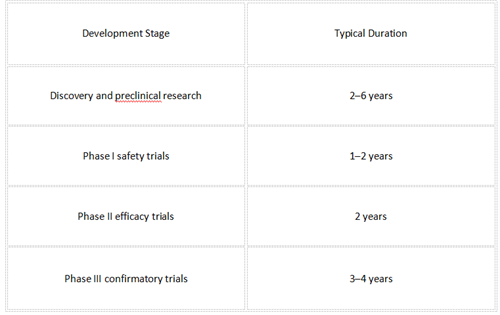
AI can shorten early discovery but cannot ethically compress the evidence required to demonstrate safety and effectiveness.
This is one reason many experts expect the first full regulatory approval of an AI-discovered drug around 2027, rather than immediately after early trial success.
6. A Reverse Perspective: The Real Revolution May Not Be Speed
Public discussions often focus on how AI may shorten the time needed to discover drugs. However, the deeper transformation may lie elsewhere.
AI allows researchers to explore biological hypotheses that were previously overlooked.
In traditional research, scientists typically pursue targets already supported by existing literature. This creates a bias toward familiar mechanisms.
Machine-learning systems, however, can identify patterns in datasets that are difficult for humans to detect. In some cases, they propose completely new biological targets.
The fibrosis drug mentioned earlier is one example. The TNIK pathway had not previously been a major focus in pulmonary fibrosis research.
This capability—generating unexpected hypotheses—may ultimately prove more transformative than reducing timelines.
7. The Expanding AI Drug Pipeline
The number of AI-assisted drug candidates entering clinical trials has grown steadily in recent years.
A 2025 analysis of the biotechnology pipeline identified:
10 AI-derived molecules in Phase II trials;
multiple additional candidates in Phase I or preclinical development.[3]
Major pharmaceutical companies are increasingly investing in AI platforms, often through partnerships with technology firms and biotech startups.
Recent collaborations include:
pharmaceutical companies acquiring AI modeling firms;
partnerships between AI developers and large drug manufacturers;
investments in automated laboratories integrating machine learning with robotics;
These developments suggest that AI is becoming integrated into the broader pharmaceutical research ecosystem.
8. Clinical Significance: What This Means for Patients
For patients and clinicians, the practical significance of AI-discovered drugs lies in several areas.
1) Potentially More Treatment Options
Faster identification of drug candidates may increase the number of therapies entering clinical trials, particularly for diseases with limited treatment options.
2) Better Targeted Therapies
AI-driven analysis of genetic and molecular data may help identify subgroups of patients who respond better to specific treatments.
3) Improved Efficiency of Medical Research
If AI reduces the cost of early-stage drug discovery, more research programs could be pursued simultaneously, expanding the overall therapeutic pipeline.
However, these benefits depend on long-term validation through clinical studies.
9. Practical Considerations for Readers
From a public health perspective, several practical considerations may help interpret the progress of AI-discovered medicines.
1) Clinical evidence remains essential
Regardless of how a drug is discovered, regulatory approval still depends on clinical trials demonstrating safety and effectiveness.
2) AI is a research tool, not a replacement for medical judgment
Human scientists, clinicians, and regulators remain responsible for evaluating data and making treatment decisions.
3) Early successes should be interpreted cautiously
Initial trial results provide signals rather than definitive conclusions. Larger studies are required before a drug becomes part of standard medical practice.
Conclusion
The possible approval of the first AI-discovered drug around 2027 would mark a symbolic milestone in biomedical research.
Yet the larger transformation is gradual.
AI is becoming integrated into multiple stages of drug development:
target discovery;
molecular design;
clinical trial optimization;
regulatory documentation;
Rather than replacing traditional pharmaceutical research, artificial intelligence is reshaping how scientists generate hypotheses, design experiments, and interpret complex biological data.
From this perspective, the first AI-discovered drug approval would represent not the culmination of a technological revolution but the beginning of a new phase in modern medicine.
The coming decade will reveal whether these tools can consistently translate computational predictions into safe and effective therapies for patients.
References:
[1] Field, H. (2023). AI-generated drug enters human clinical trials for idiopathic pulmonary fibrosis. CNBC.
https://www.cnbc.com/2023/06/29/ai-generated-drug-begins-clinical-trials-in-human-patients.html
[2] U.S. Food and Drug Administration. (2025). FDA qualifies first AI drug development tool for clinical trials.
https://www.fda.gov/drugs/drug-safety-and-availability/fda-qualifies-first-ai-drug-development-tool-will-be-used-mash-clinical-trials
[3] American Chemical Society. (2025). Generative AI in drug discovery: Emerging clinical evidence.
https://www.acs.org/content/dam/acsorg/membership/acs/benefits/discovery-reports/generativeai.pdf
[4] Reuters. (2026). U.S. and European regulators set principles for good AI practice in drug development.
https://www.reuters.com/business/healthcare-pharmaceuticals/us-european-regulators-set-principles-good-ai-practice-drug-development-2026-01-14/
Author Information:
Dr. Lin Wei is a medical science communicator and health research analyst specializing in translating complex biomedical research into accessible public health information. He holds a doctoral degree in biomedical sciences and has participated in collaborative research projects related to clinical pharmacology and digital health technologies. Over the past decade, he has published numerous science communication articles focusing on drug development, medical innovation, and evidence-based medicine. His work aims to bridge the gap between academic research and public understanding while maintaining accuracy, transparency, and adherence to evidence-based standards.
Disclaimer
This article is intended for science communication and educational purposes only. It summarizes current research and regulatory developments related to AI-assisted drug discovery. The information should not be interpreted as medical advice, diagnosis, or treatment recommendations. For personal medical decisions, consultation with qualified healthcare professionals is recommended.
Recommended for you: