Liquid stick packs: The "carry-on" dosage form that is transforming the travel habits of patients with chronic diseases
[This article is for general scientific reference only and does not constitute medical advice. Any changes to medication should be made after consulting a doctor or pharmacist.]
For patients living with chronic diseases, adherence is not determined solely by drug efficacy. It is shaped by whether treatment can realistically fit into daily life. Travel—whether routine commuting, business trips, or long-distance journeys—remains one of the most consistent disruptors of medication adherence.
Traditional dosage forms were largely designed around a static environment: the home. Bottled liquid medications assume stable storage, access to measuring tools, and predictable routines. Tablets and capsules assume access to water and the ability to swallow comfortably. Once patients step outside these assumptions, friction emerges: heavy bottles, leakage risks, dosing uncertainty, and missed or duplicated doses.
In this context, liquid stick packs—single-dose, sealed liquid sachets—represent more than a packaging innovation. They reflect a structural shift in pharmaceutical design: from “drug-centered” to “patient-life-centered.” By aligning formulation, packaging, and real-world behavior, they are beginning to reshape how chronic disease treatment integrates into mobile lifestyles.
The Underestimated Problem: Why Travel Disrupts Medication Adherence
Medication non-adherence during travel is often framed as a behavioral issue. However, closer examination suggests that the problem is frequently structural.
Limitations of Bottled Liquid Medications
Bulk and weight: Glass or PET bottles occupy significant space and add weight to luggage.
Leakage risk: Pressure changes during flights or compression in bags can cause spills.
Dosing variability: Measuring cups or droppers introduce user-dependent error.
Lack of traceability: It is difficult to confirm whether a dose has been taken by simply observing a bottle.
Contamination risk: Repeated opening exposes contents to air, saliva, and environmental microbes.
Patients often attempt to adapt by transferring liquids into smaller containers. This introduces additional risks: loss of labeling, compromised sterility, and dosing ambiguity.
Tablets and Capsules Are Not a Universal Solution
While more portable, solid dosage forms are not suitable for all patients or conditions:
Swallowing difficulties are common, especially among older adults;
Some drugs require liquid formulations for absorption or tolerability;
Administration requires water, which may not always be available;
These limitations highlight a gap between pharmaceutical design and real-world use scenarios.
Liquid Stick Packs: A System-Level Design Innovation
Liquid stick packs are often described as “smaller bottles,” but this characterization understates their significance. Their value lies in the integration of formulation science, packaging engineering, and patient usability.
Core Design Logic
Liquid stick packs use multilayer composite films—often including aluminum barriers—to protect contents from light, oxygen, and moisture. They are produced using form-fill-seal technology, ensuring precise dosing and hermetic sealing during manufacturing.
Three key design breakthroughs define their clinical relevance:
1. Precise, Standardized Single Dosing
Each stick pack contains an exact, pre-calibrated dose. This eliminates variability associated with manual measurement and is particularly relevant for chronic conditions requiring tight dose control, such as hypertension and cardiovascular disease [1].
From a pharmacological perspective, reducing intra-patient dose variability contributes to more stable therapeutic exposure.
2. Extreme Portability and Structural Stability
The flat, lightweight format allows patients to carry multiple doses with minimal burden. Unlike bottles, stick packs:
Do not leak under pressure changes;
Can be distributed across bags or pockets;
Allow flexible packing based on travel duration;
This transforms medication from a “prepared item” into an “ambient necessity,” similar to tissues or personal care items.
3. Integrated Packaging–Formulation Compatibility
The barrier properties of composite films enhance drug stability throughout shelf life. At the same time, ergonomic features—such as easy-tear notches and anti-slip textures—support use among elderly patients and those with reduced hand dexterity [2].
Beyond Convenience: Clinical and Behavioral Implications
The impact of liquid stick packs extends beyond portability. Their design directly addresses key determinants of medication adherence.
Visual Confirmation and Adherence Tracking
Each used stick pack serves as a physical record of medication intake. Unlike bottles, where consumption is difficult to quantify visually, empty sachets provide immediate confirmation.
This feature is particularly valuable for:
Older adults with memory impairment;
Multi-caregiver environments (e.g., children cared for by multiple family members);
Complex multi-drug regimens;
The concept aligns with broader evidence showing that packaging interventions can improve adherence rates by simplifying routines and providing visual cues.
Reduced Cognitive Load
Adherence is often compromised not by intentional non-compliance, but by cognitive burden. Travel introduces schedule disruptions, fatigue, and environmental changes.
By eliminating the need for:
Measuring;
Preparing;
Locating water;
Remembering whether a dose was taken;
liquid stick packs reduce the number of steps required for each dose. This simplification is a measurable determinant of adherence behavior.

Microbial Safety and Reduced Preservative Dependence
Traditional liquid medications are exposed to repeated contamination after opening, necessitating the use of preservatives.
Single-use stick packs eliminate repeated exposure, which may allow:
Lower preservative concentrations;
Reduced risk of microbial growth during use;
This is particularly relevant for long-term therapies where cumulative exposure to excipients may matter.
Travel-Specific Advantages: Reconstructing the Medication Experience
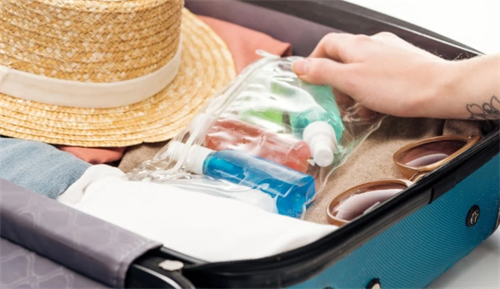
1. “Carry-On Compatibility”
Patients can pack medication according to the exact duration of travel. This reduces both waste and uncertainty.
In aviation contexts, individual stick packs are more likely to comply with liquid restrictions due to their small volume, reducing delays during security screening.
2. Elimination of Ancillary Tools
No measuring cups, droppers, or water bottles are required. This is particularly advantageous in:
Outdoor environments;
Transit situations;
Regions with limited access to clean water;
3. Reduced Risk of Missed or Duplicate Dosing
The combination of pre-measured doses and visual tracking reduces two common risks:
Underdosing, due to skipped doses;
Overdosing, due to uncertainty about prior intake;
4. Psychological Impact: Restoring Autonomy
An often-overlooked effect is psychological. When medication becomes easier to carry and use, patients experience less disruption to their routines.
Treatment shifts from being an “interruption” to becoming a “background behavior.” This subtle shift can influence long-term adherence more than any single clinical intervention.
Evidence from Packaging Interventions: A Proxy for Impact
Direct large-scale studies on liquid stick packs remain limited. However, evidence from analogous packaging interventions provides insight.
A 2024 economic model analyzing antihypertensive therapy in a Medicare Advantage population found that adherence improved significantly when medications were dispensed in unit-dose packaging, with an associated reduction in total healthcare costs of approximately $3.82 million annually per cohort [3].
Similarly, studies in commercially insured populations showed that increased drug acquisition costs were offset by reductions in hospitalizations and emergency visits.
Meta-analyses suggest that packaging interventions can increase adherence rates from approximately 63% to 71%, particularly when combined with pharmacist guidance.
These findings support a broader conclusion: packaging is not neutral—it is an active component of therapeutic effectiveness.
Clinical Application Scenarios:
Gastrointestinal Disorders
Liquid antacids and mucosal protectants are commonly used in conditions such as gastroesophageal reflux disease. Stick packs enable immediate, on-demand use during meals or travel without preparation.
Allergy and Respiratory Conditions
Rapid-response medications, such as antihistamines, benefit from portability and ease of administration, particularly during seasonal flare-ups.
Pediatric Chronic Care
Weight-based dosing remains necessary in many cases, but for maintenance regimens, pre-measured stick packs reduce caregiver burden and dosing errors.
Elderly Populations
For patients with dysphagia, reduced hand strength, or cognitive impairment, stick packs offer a simpler and safer alternative to both tablets and bottled liquids.
Regulatory and Industry Context (2023–2026)
Regulatory agencies increasingly recognize the role of usability in treatment outcomes.
FDA and EMA Developments
Recent guidance emphasizes:
Patient-focused drug development;
Real-world usability as part of benefit–risk assessment;
Consideration of delivery systems in adherence outcomes [4][5];
While liquid stick packs are evaluated within existing oral liquid frameworks, their alignment with these priorities positions them well for future adoption.
Industry Trends
Pharmaceutical companies are investing in:
Advanced barrier materials for stability;
Formulation techniques to enable room-temperature storage;
Sustainable packaging solutions;
The shift reflects a broader transition from “treating diseases” to “managing diseases,” where long-term adherence becomes a central metric of success.
Boundaries and Appropriate Use
Despite their advantages, liquid stick packs are not universally applicable.
Suitable Use Cases
Fixed-dose chronic medications;
Maintenance therapies;
OTC and adjunctive treatments;
Limitations
Drugs requiring flexible dose titration;
Medications needing refrigeration;
High-potency or narrow therapeutic index drugs;
Importantly, efficacy must be demonstrated through bioequivalence studies to ensure that reformulation does not alter clinical outcomes [2].
Patients should not independently switch dosage forms without professional guidance.
Future Outlook: From Packaging Innovation to Care Model Transformation
Expansion into Prescription Therapies
As formulation technologies evolve, more prescription medications—particularly in chronic disease categories—may adopt stick pack formats.
Integration with Digital Health
Future designs may include:
QR-based instructions;
Adherence tracking systems;
Integration with telemedicine platforms;
Sustainability Pressures
Environmental concerns are likely to drive innovation in biodegradable or recyclable materials, influencing both regulatory incentives and consumer preferences.
Health System Adoption
Some healthcare systems, particularly in Europe, are beginning to incorporate patient experience and usability into procurement decisions. This trend may accelerate global adoption.
Conclusion
Liquid stick packs illustrate how small design changes can have system-level effects. By addressing practical barriers—portability, dosing accuracy, and usability—they enable treatment to align more closely with real-world behavior.
Their significance lies not in replacing all dosage forms, but in redefining the relationship between patients and their treatments. When medication becomes easier to carry, easier to use, and easier to integrate into daily life, adherence improves—not through enforcement, but through design.
For chronic disease management, this represents a meaningful shift: from expecting patients to adapt to treatment, toward designing treatment that adapts to patients.
References:
[1] Elfinger, M., & Kuch, D. (2025). Safety meets accessibility: Creating the ideal packaging for on-the-go dosage forms. Contract Pharma. https://www.hermes-pharma.com/wp-content/uploads/2025/03/Contract-Pharma-Safety-Meets-Accessibility-Creating-ideal-packaging-for-on-the-go-dosage-forms.pdf
[2] Catalent. (2025). Optimizing product packaging and oral drug delivery with stick packs. Catalent Pharma Solutions. https://www.catalent.com/expert-content/oral-manufacturing/optimizing-product-packaging-and-oral-drug-delivery-with-stick-packs-execsum/
[3] Journal of Managed Care & Specialty Pharmacy. (2024). اقتصادی modeling of adherence improvements with unit-dose packaging. https://www.jmcp.org
[4] U.S. Food and Drug Administration. (2025). Patient-Focused Drug Development: Guidance for Industry. https://www.fda.gov/media/patient-focused-drug-development
[5] European Medicines Agency. (2024). Reflection paper on patient-centric pharmaceutical design. https://www.ema.europa.eu/en/documents
Author Information
This article was written by Dr. Elowen Harper Quinn, a medical and health science communicator with a background in pharmacy and certification in health management. With over eight years of experience in chronic disease medication management and formulation science communication, Dr. Quinn has produced more than 300 evidence-based articles. Her work integrates pharmacopoeia standards, clinical research, and pharmaceutical industry analysis, with a focus on translating complex medical concepts into accessible, accurate information for general audiences. She maintains a commitment to objectivity, avoiding exaggerated claims and ensuring all content aligns with current scientific and regulatory evidence.
Disclaimer
This article is intended for medical and health education purposes only and does not constitute medical advice, diagnosis, or treatment recommendations. Patients with chronic diseases should consult qualified healthcare professionals before making any changes to medication regimens or dosage forms. All treatment decisions should be based on individual clinical conditions and current medical guidance.
Recommended for you: