Microneedle Patch: A New Drug Delivery Method That Avoids Shots and Pills — How Close Is It to Us?
For decades, drug delivery has relied on two dominant routes: oral administration and injection. Each has clear strengths but also structural limitations. Oral drugs are convenient but often unsuitable for large-molecule therapies due to degradation in the gastrointestinal tract. Injections provide high bioavailability but introduce pain, require training, and create logistical burdens in both clinical and home settings.
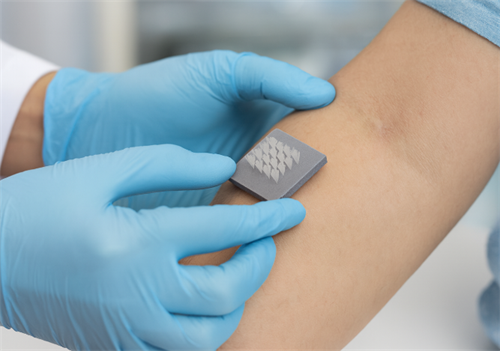
Microneedle patches—also referred to as microarray patches (MAPs)—are emerging as a third pathway. They aim to combine the convenience of oral dosing with the effectiveness of injections. As of 2026, this technology is transitioning from laboratory innovation to early clinical reality. The key question is no longer whether microneedles work, but how and where they will fit into real-world medicine.
1. Rethinking Drug Delivery: Why Microneedles Matter
The outermost layer of the skin, the stratum corneum, is a highly effective barrier. Traditional transdermal patches (such as nicotine or hormone patches) rely on passive diffusion, which limits them to small, lipophilic molecules. Most modern therapies—especially biologics—cannot cross this barrier.
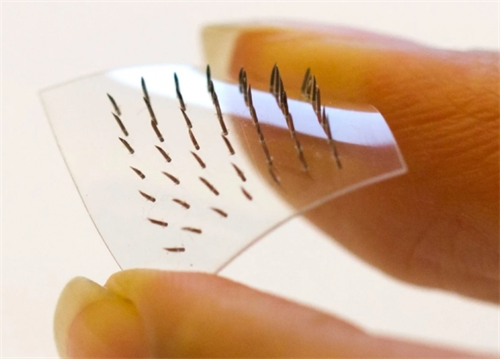
Microneedles solve this problem through a mechanical approach. Arrays of microscopic needles, typically 25–2000 μm in length, create temporary microchannels in the skin. These channels allow drugs to reach the epidermis or superficial dermis, areas rich in immune cells and capillaries, without penetrating deeply enough to trigger pain or bleeding [1].
This positioning is clinically meaningful. It enables:
Avoidance of gastrointestinal degradation;
Bypassing first-pass liver metabolism;
Direct interaction with immune-active tissue;
Reduced need for trained administration;
From a pharmacological perspective, microneedles do not simply “replace injections.” They create a new delivery layer between oral and injectable routes.
2. Design Diversity: Not One Technology, But a Platform
Microneedle systems are not uniform. Their clinical potential depends heavily on design type, which determines how drugs are delivered.
Solid microneedles create microchannels, followed by topical drug application.
Coated microneedles deliver drugs rapidly from a surface coating.
Dissolving microneedles embed drugs in biodegradable materials that dissolve after insertion.
Hydrogel microneedles absorb interstitial fluid and enable sustained diffusion over time.
This diversity allows tailoring to different clinical needs—rapid onset, sustained release, or high precision [1].
In 2026, the most active area of development is dissolving and hydrogel-based systems. These avoid sharp waste, simplify disposal, and improve patient acceptance.
3. From Injection Kits to “Dose-as-a-Device”: A Structural Shift
Traditional injectable therapies require multi-component systems: vials, syringes, needles, alcohol swabs, and disposal containers. Each step introduces potential for error, contamination, or non-adherence.
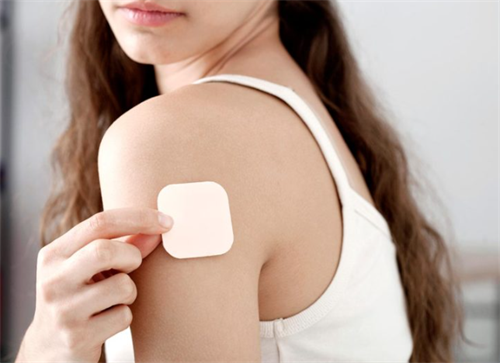
Microneedle patches fundamentally change this structure. The drug is integrated into the device itself. A typical workflow becomes:
Open a sealed pouch;
Apply the patch;
Wait for delivery;
Remove and discard;
This shift reduces procedural complexity and minimizes human error. It also redefines pharmaceutical packaging: instead of protecting a container, packaging protects a pre-dosed delivery system.
From a systems perspective, this transition is comparable to the shift from reusable syringes to prefilled injectors—but potentially more transformative.
4. Clinical Progress in 2026: Beyond Concept Validation
4.1 Pain Reduction and Procedural Support
A randomized controlled trial in early 2026 evaluated benzocaine microneedle patches in dental procedures. Only 10% of patients reported injection pain after pre-treatment, compared to 70% in controls. No significant adverse reactions were observed.
This suggests a near-term role: microneedles as adjuncts rather than replacements, improving patient experience without altering core treatment protocols.
4.2 Chronic Wound and Tissue Repair
Microneedle-based dressings are being explored for diabetic ulcers. In animal models, patches delivering deferoxamine achieved sustained release over seven days, promoting vascularization and tissue regeneration.
Another dual-drug patch combining antibiotic and anesthetic agents demonstrated both infection control and pain reduction.
These applications highlight a key advantage: localized, controlled delivery in tissues that are difficult to treat with conventional methods.
4.3 Ophthalmology: Overcoming Delivery Barriers
Eye drops suffer from rapid clearance and low bioavailability. Microneedle patches designed for corneal application have shown improved drug penetration and longer retention.
In animal models, a single administration achieved better infection control than repeated eye drops. This indicates potential for reducing dosing frequency in ophthalmic care.
4.4 Immune Monitoring Without Blood Draws
A notable 2026 development is the use of microneedles for sampling rather than delivery.
New patches can collect immune cells—particularly memory T cells—from skin tissue within 15–30 minutes. These cells are often more abundant in tissue than in blood, making them valuable for monitoring vaccine response or disease progression.
This approach may enable:
Non-invasive immune monitoring;
Home-based testing;
Reduced reliance on biopsies;
It expands microneedles from a delivery tool to a diagnostic platform.
5. Sustained Delivery Breakthrough: Toward “Wearable Infusion”
One of the most significant limitations of early microneedle systems was drug loading capacity. Many therapies require sustained, high-dose delivery, which patches historically could not provide.
A 2025 study published in Science Translational Medicine introduced a wearable osmotic microneedle (OMN) patch capable of continuous drug delivery for at least 24 hours [2].
Key features include:
Osmotic pressure-driven release (no electronics required);
Hollow microneedles for fluid transport;
Adjustable release rates via formulation design;
In animal models:
Peptide drugs maintained stable plasma concentrations;
Blood glucose control improved compared to injections;
Chemotherapy delivery showed enhanced efficacy;
Preliminary human evaluations reported minimal pain and good tolerability.
This development addresses a central pharmacological challenge: maintaining drug levels within the therapeutic window. It moves microneedles closer to replacing infusion-based systems in certain scenarios.
6. Cold Chain and Global Access: A Less Visible Impact
Beyond patient experience, microneedles may influence pharmaceutical logistics.
Many biologics require strict cold chain management. Temperature deviations can degrade products, with some reports suggesting that a significant proportion of vaccines experience quality loss during distribution.
Microneedle patches, particularly those using dried formulations, show improved thermal stability. This opens the possibility of:
Ambient-temperature distribution;
Reduced reliance on refrigeration infrastructure;
Lower transportation costs and carbon footprint;
In low-resource settings, this could significantly expand access to vaccines and biologic therapies.
However, removing cold chain dependency introduces new challenges. Moisture sensitivity becomes critical, requiring high-barrier packaging and strict humidity control.
7. Realistic Boundaries: What Microneedles Cannot Yet Do
Despite rapid progress, microneedles are not universally applicable.
7.1 Drug Loading Limitations
Most systems currently deliver milligram-scale doses. High-dose therapies remain challenging, although new designs like OMN patches are addressing this.
7.2 Manufacturing Complexity
Producing uniform microneedles with consistent drug distribution requires advanced fabrication techniques. Scaling to millions of units while maintaining quality remains a major hurdle.
7.3 Regulatory Classification
Microneedles combine drug and device characteristics. Regulatory pathways are still evolving, particularly for dissolving systems.
7.4 Patient Perception
Although painless, the concept of “needles” may still create hesitation. Acceptance will depend on education and user experience.
8. A Necessary Clarification: Not All “Patches” Are Equal
The growing popularity of patches has led to misleading products, particularly in areas like weight loss.
As of 2026, there are no FDA-approved transdermal patches delivering GLP-1 receptor agonists. These molecules are large peptides that cannot effectively penetrate the skin without specialized delivery systems.
Many commercially marketed “GLP-1 patches” contain herbal ingredients with limited evidence and uncertain absorption. Their effects are not comparable to approved injectable or oral therapies.
This distinction is important: microneedle patches are a scientifically grounded technology, but not all patches on the market reflect that level of evidence.
9. From Technology to System: The Role of Packaging and Design
An emerging insight from industry is that packaging is not secondary—it is central to microneedle success.
Because these patches are:
Moisture-sensitive;
Pre-dosed devices;
Intended for diverse settings (clinic, pharmacy, home);
Packaging must ensure:
Barrier protection;
Ease of use;
Tamper evidence;
Clear instructions;
Experts increasingly emphasize a “packaging-first” approach, integrating packaging design early in development rather than treating it as a final step.
10. Future Outlook: Integration, Personalization, and Scale
Based on current evidence, several trends are likely over the next decade:
10.1 Integration of Delivery and Monitoring
Microneedles may combine sensing and drug release, enabling closed-loop systems (e.g., glucose-responsive insulin delivery).
10.2 Expansion of Indications
Short-term: vaccines, dermatology, local anesthesia
Mid-term: chronic disease management (e.g., diabetes, obesity)
Long-term: complex biologics and combination therapies
10.3 Personalized Drug Delivery
Adjustable patch designs could tailor dosing to individual needs, including shape, drug combination, and release profile.
10.4 Direct-to-Patient Models
While initial use will remain clinician-guided, long-term trends suggest increasing home-based application, especially for chronic therapies.
11. How Close Are We?
Microneedle technology is no longer theoretical. In 2026:
Early clinical applications are emerging;
Advanced delivery systems are being validated;
Manufacturing and regulatory frameworks are evolving;
A reasonable timeline:
3–5 years: localized treatments, vaccines, adjunct therapies
5–10 years: broader use in chronic disease management
Beyond 10 years: integration into personalized, smart delivery systems
The most realistic role is not replacement, but complement. Microneedles fill the gap between oral convenience and injectable precision.
Conclusion
Microneedle patches represent a shift in how medicine adapts to patients’ lives. By reducing pain, simplifying administration, and potentially improving drug stability and access, they address long-standing limitations in drug delivery.
Their value is not defined by novelty, but by alignment with real-world needs: adherence, accessibility, and consistency.
Rather than replacing existing methods, microneedles expand the available toolkit. In doing so, they reflect a broader trend in medicine—from focusing solely on drugs to optimizing the entire system of delivery.
References:
[1] Sailaja, K. S. K. (2025). Microneedles as a novel carrier for transdermal drug delivery system. Clinical Case Reports and Studies, 11(2), 1–5. https://doi.org/10.59657/2837-2565.brs.25.289
[2] Gu, Z., et al. (2025). A wearable osmotic microneedle patch provides high-capacity sustained drug delivery in animal models. Science Translational Medicine. https://www.science.org/doi/10.1126/scitranslmed
[3] Cuneo, E. (2026). There’s a MAP for that: How microneedle patches could change cold chain, drug delivery, and material requirements. Pharmaceutical Technology. https://www.pharmtech.com
[4] Li, W., et al. (2026). Biomimetic hydrogel microneedles for corneal drug delivery. Advanced Functional Materials. https://onlinelibrary.wiley.com
[5] Ferraro, K., & Yedidi, R. (2026). GLP-1 patches: Do they work? Ro Health Guide. https://ro.co
Author Information
Draven Cole Whitaker is a medical and health science writer with a background in pharmacy and certified training in health management. With over eight years of experience in chronic disease management and drug delivery research communication, he has authored more than 300 evidence-based articles. His work focuses on translating complex pharmaceutical innovations into clear, practical insights for general readers. All content is grounded in peer-reviewed research, regulatory updates, and clinical data. He maintains a commitment to accuracy, neutrality, and clarity, avoiding exaggerated claims while emphasizing real-world applicability and patient-centered perspectives.
Disclaimer
This article is for medical and health science education purposes only and does not constitute medical advice, diagnosis, or treatment recommendations. All information is based on publicly available research and regulatory updates as of 2026. Patients should consult qualified healthcare professionals before making any decisions regarding medication use or treatment methods. Do not change dosage forms or treatment plans without professional guidance.
Recommended for you: