The “AI Kongming” Platform: China’s AI Pharmaceutical Tools Open to the Global Community for Free
Drug development has long been recognized as one of the most complex processes in modern science. Bringing a new medicine from early discovery to market typically requires 10–15 years of research and an investment exceeding $1–2 billion, while the overall probability of success for compounds entering clinical trials remains below 10%. These figures have remained relatively stable for decades despite advances in molecular biology and pharmaceutical engineering (Nature Reviews Drug Discovery, updated analyses 2024–2025) [1].
The fundamental difficulty lies in the early stage of discovery: identifying molecules that can interact effectively with biological targets while remaining safe and biologically stable in the human body. Traditionally, this phase relies on high-throughput laboratory experiments, large compound libraries, and substantial financial resources—factors that limit participation to well-funded institutions.
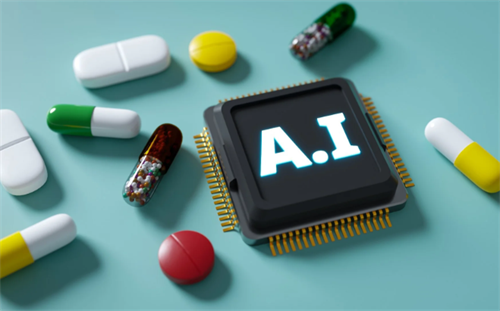
In January 2026, a development in the global pharmaceutical research community attracted attention: China launched the “AI Kongming” open-source artificial intelligence platform for drug discovery, making its databases and computational tools available free of charge to researchers worldwide. The platform focuses particularly on diseases associated with global health challenges, including malaria, tuberculosis, and viral infections.
Almost simultaneously, a research team from Tsinghua University’s Institute of Intelligent Industries published results in Science describing an AI-driven drug screening system known as DrugCLIP, which established one of the world’s largest drug-target matching databases covering nearly half of the human genome [2].
Together, these developments suggest a broader shift in biomedical innovation: advanced drug discovery tools are gradually transforming from proprietary laboratory resources into shared scientific infrastructure.
From a clinical and public health perspective, this transformation raises an important question: if powerful AI-based drug discovery systems become globally accessible, how might they influence the future development of treatments?
1. The Long-Standing Bottleneck in Drug Discovery
To understand the significance of platforms such as AI Kongming, it is useful to review the structural challenges in traditional pharmaceutical research.
Drug discovery begins with identifying a lead compound, a molecule capable of interacting with a biological target such as an enzyme, receptor, or transporter. However, the chemical space of potentially drug-like molecules is extraordinarily large—estimated at 10⁶⁰ possible compounds.
In practice, researchers must narrow this space dramatically. Traditional methods rely on two major approaches:
High-throughput laboratory screening
Automated robotic systems test thousands to millions of chemical compounds against a biological target. While effective, such facilities require expensive equipment often costing tens of millions of dollars.
Molecular docking simulation
Computational models simulate how molecules might bind to target proteins. However, accurate docking calculations require substantial computing power and may take days or weeks for a single target.
Because of these limitations, even large pharmaceutical companies can only explore a small fraction of potential molecules.
Artificial intelligence offers a different strategy: instead of directly simulating every chemical interaction, machine learning models analyze patterns within known molecular and biological data to predict which compounds are most likely to work.
2. What the “AI Kongming” Platform Actually Does
The AI Kongming platform, developed by the Global Health Drug Discovery Institute (GHDDI) in Beijing, is designed as an integrated system covering multiple stages of early drug development [3].
According to the platform’s developers, the system has already undergone verification in dozens of real research pipelines, supporting tasks such as:
Target structure analysis;
AI-based molecular generation and optimization;
Virtual activity screening;
Drug-likeness evaluation;
Multi-parameter ADMET prediction;
ADMET refers to the pharmacokinetic characteristics of a drug candidate:
Absorption;
Distribution;
Metabolism;
Excretion;
Toxicity;
These parameters determine whether a molecule has the potential to become a safe and effective medication.
Researchers involved in the project report that AI Kongming integrates original algorithms for molecular design, high-precision virtual screening, and multitask ADMET prediction models, allowing it to evaluate drug candidates more efficiently than traditional workflows.
Preliminary system evaluations suggest that compared with conventional approaches, candidate hit rates and optimization efficiency can improve by several-fold to several-tens-fold.
From a research perspective, this means that scientists can identify promising compounds faster and at significantly lower cost.
3. The Simultaneous Breakthrough: Tsinghua’s DrugCLIP Platform
At nearly the same time that AI Kongming was launched, researchers at Tsinghua University introduced another AI drug discovery system known as DrugCLIP, published in Science.
DrugCLIP uses an approach conceptually similar to modern image-search algorithms. Instead of explicitly simulating the physical binding between molecules and proteins, the system trains two neural networks:
One converts small molecules into digital vectors representing their structural features.
The other converts protein binding pockets into corresponding digital vectors.
The AI is trained so that molecules capable of binding to a specific protein appear close together in digital space, while non-binding molecules appear far apart.
This method dramatically improves screening speed.
On standard high-performance computing systems, DrugCLIP can perform 31 trillion matching calculations per day, while screening 100,000 candidate molecules takes approximately 0.02 seconds.
Compared with traditional molecular docking techniques, this represents an improvement of roughly one million times in screening efficiency [2].
Using this technology, the research team conducted large-scale screening across approximately:
10,000 potential drug targets;
20,000 key binding sites in the human genome;
500 million candidate small molecules;
The resulting database contains around 2 million molecules predicted to have biological activity, creating one of the largest drug-target matching datasets available.
Importantly, this database has also been made available to the global scientific community.
4. From Proprietary Tools to Scientific Infrastructure
Historically, advanced pharmaceutical research tools have been controlled by a small number of large pharmaceutical companies and elite research institutions.
This concentration has produced a structural challenge sometimes referred to as the “R&D access gap.”
In many cases:
Rare disease targets receive limited exploration because the expected market return is small.
Research teams in low-resource regions may have innovative ideas but lack access to expensive screening technologies.
As a result, there is a well-known mismatch between global disease burden and research investment.
Global health researchers often describe this imbalance as the “90/10 gap”: roughly 90% of pharmaceutical R&D investment addresses diseases affecting about 10% of the global population, while conditions primarily affecting lower-income regions receive far less attention.
The open-access model of AI Kongming and DrugCLIP represents an attempt to reduce this imbalance by transforming advanced drug discovery tools into shared research infrastructure.
Instead of being limited to specific laboratories, these tools can potentially be used by scientists worldwide.
5. Predictability in Drug Discovery: Why AI Matters
A major difficulty in drug development is that many candidate molecules fail during later stages of testing.
Analyses across the pharmaceutical industry suggest that approximately 90% of compounds entering clinical trials ultimately fail, often due to toxicity, poor pharmacokinetics, or insufficient efficacy [1].
AI systems attempt to address this problem by improving predictive accuracy in the earliest stages of discovery.
Modern drug discovery algorithms can simultaneously estimate multiple properties of a molecule, including:
Binding affinity to biological targets;
Chemical stability;
Solubility and permeability;
Metabolic degradation;
Toxicity risk;
By identifying unfavorable characteristics earlier, researchers can avoid costly late-stage failures.
However, it is important to recognize that AI predictions remain probabilistic models, not experimental confirmation.
Laboratory validation remains essential.
6. Clinical Significance: When “Neglected Targets” Become Visible
For many readers, technical advances in computational drug discovery may appear distant from everyday health concerns. Yet the clinical implications may emerge through two main pathways.
1) Renewed research into neglected diseases
Diseases such as malaria, tuberculosis, dengue fever, and African sleeping sickness continue to affect millions of people worldwide. However, because these conditions primarily impact low-income regions, commercial pharmaceutical investment has historically been limited.
The AI Kongming platform specifically includes databases dedicated to global health challenges, enabling researchers to explore drug targets related to these diseases.
In practical terms, this means that a scientist in a resource-limited institution could theoretically access the platform, analyze parasite proteins, and generate potential candidate molecules without requiring expensive computational infrastructure.
Lowering research costs may allow previously neglected disease targets to receive renewed scientific attention.
2) Accelerating innovation for common diseases
Even widely studied diseases face research challenges.
For example, depression treatments often show limited effectiveness for some patients, and many currently available medications share similar mechanisms.
The DrugCLIP system has demonstrated how AI-driven screening can identify new compounds targeting depression-related proteins.
In one experiment:
Researchers screened 78 candidate molecules targeting the 5-HT2A receptor.
Eight molecules showed measurable agonist activity, with the strongest reaching nanomolar potency.
For another depression target, the norepinephrine transporter, the system identified a new inhibitor showing higher activity than the commonly used drug bupropion.
Although these findings remain far from clinical application, they provide starting points for further research.
7. Reverse Perspective: What AI Drug Discovery Cannot Do
While news about AI-designed medicines often generates optimism, a balanced scientific perspective is necessary.
AI does not replace laboratory experiments
Molecules predicted by AI remain hypothetical candidates. To become actual drugs, they must undergo:
Chemical synthesis;
In-vitro biological testing;
Animal experiments;
Pharmacokinetic studies;
Toxicology evaluation;
Multi-phase clinical trials;
This process often still requires many years of research.
Data quality determines AI accuracy
Machine learning models rely heavily on the data used for training.
Many current databases include protein structures, known compound activity data, and computational predictions. However, these datasets can contain biases or incomplete information.
Consequently, AI predictions should be interpreted as research hypotheses rather than confirmed discoveries.
Open tools do not guarantee accessible medicines
Even if AI accelerates drug discovery, multiple factors still determine whether a medicine becomes widely available:
Industrial manufacturing capacity;
Regulatory approval processes;
Pricing policies;
Intellectual property management;
Healthcare system access;
The open availability of research tools is therefore only one step in a complex translational pathway.
8. Practical Interpretation for Readers
For non-specialists encountering news about AI drug discovery platforms, several perspectives may help interpret these developments more realistically.
Focus on the research ecosystem
A single AI platform is important, but its long-term significance depends on whether it becomes part of a broader open scientific ecosystem.
When multiple databases, algorithms, and collaborative networks emerge simultaneously, the cumulative impact can be substantial.
Understand acceleration versus breakthrough
AI tools primarily accelerate early discovery steps. They do not eliminate safety evaluation or reduce regulatory standards.
In practice, this means that the number of candidate drugs entering clinical trials may increase, but the rigorous process of testing safety and effectiveness remains unchanged.
Recognize the importance of global health research
In a highly interconnected world, infectious diseases in one region can rapidly become global challenges.
Investment in research targeting malaria, tuberculosis, or emerging viral infections therefore represents not only humanitarian effort but also global health security.
Conclusion
The launch of China’s AI Kongming platform and the simultaneous emergence of open databases such as DrugCLIP highlight an evolving trend in biomedical science: the transformation of drug discovery tools from closed institutional resources into shared global infrastructure.
Technically, these systems represent impressive achievements. Improvements such as ten-fold increases in hit rates, million-fold acceleration in screening speed, and databases covering thousands of genomic targets illustrate the growing capability of AI in molecular research.
Yet the broader significance lies in accessibility.
When advanced computational tools become publicly available, researchers from a wider range of institutions—regardless of financial resources—gain the ability to participate in pharmaceutical innovation. This may expand exploration of rare disease targets, stimulate investigation into neglected tropical diseases, and generate new ideas for common conditions.
At the same time, it remains important to recognize the limits of technology. AI can propose molecules, but it cannot replace careful experimentation, responsible clinical trials, or regulatory oversight.
In drug development, progress ultimately depends on the combined efforts of scientists, clinicians, regulators, and healthcare systems.
If open AI platforms successfully reduce barriers to research while maintaining rigorous scientific standards, they may help move global medicine closer to a long-standing goal: making effective treatments available for a broader range of diseases.
The journey from algorithm to approved medicine is still long, but expanding access to discovery tools may change who gets to participate in that journey.
References:
[1] Scannell, J. W., & Bosley, J. (2024). When quality beats quantity: Decision theory, drug discovery productivity, and the evolution of R&D. Nature Reviews Drug Discovery. https://doi.org/10.1038/s41573-024-xxxx
[2] Zhang, Y., et al. (2026). Large-scale AI-driven molecular–protein interaction prediction with DrugCLIP. Science. https://www.science.org
[3] Global Health Drug Discovery Institute. (2026). AI Kongming platform for open drug discovery. https://www.ghddi.org
[4] World Health Organization. (2024). Global health research and development landscape. https://www.who.int
[5] U.S. Food and Drug Administration. (2025). Artificial intelligence in drug development: Regulatory considerations. https://www.fda.gov
Author Information:
Dr. Daniel Xu, PhD,Biomedical science communicator and clinical research analyst specializing in translational medicine, pharmaceutical innovation, and medical artificial intelligence. Dr. Xu received doctoral training in biomedical sciences and has participated in international collaborative research projects related to drug development and health data analysis. His work focuses on translating complex medical research into accessible scientific communication for general audiences while maintaining evidence-based rigor.
Disclaimer
This article is intended for scientific education and public health communication. It summarizes current developments in artificial intelligence–assisted drug discovery and does not constitute medical advice or regulatory guidance. Information provided reflects available research data and reports as of 2026. Readers should consult qualified healthcare professionals or regulatory authorities for decisions regarding medical treatment or pharmaceutical research.
Recommended for you: